In September 1940, Witold Pilecki allowed himself to be caught in a German roundup in occupied Warsaw. The Polish resistance officer was trying to enter Auschwitz, a new Nazi concentration camp from which alarming reports of prisoner deaths had begun to emerge. His assignment was to learn what was happening inside, organize prisoners and send information back out.
Pilecki could not know how Auschwitz would expand. Established to imprison Polish political prisoners and others, it later became a central site of the Nazi genocide of European Jews. His story belongs within that larger history of the camp and its victims. It is also a record of what prisoners tried to do for one another under conditions designed to leave them almost powerless.
A mission into an unknown camp
Born in 1901, Pilecki served in the Polish military and helped establish the Secret Polish Army after Germany invaded Poland in 1939. In the summer of 1940, members of that underground organization were sent to Auschwitz. News of deaths in the camp reached Warsaw, but the resistance needed reliable information from inside.
The proposal to infiltrate Auschwitz came from within the underground. Historians differ on exactly who first suggested it, but Pilecki accepted the assignment. On 19 September 1940, he let German forces arrest him during a roundup. He used the identity of Tomasz Serafiński and arrived at Auschwitz on 22 September, where he was registered as prisoner number 4859.
The distinction matters: he chose the dangerous mission, but he did not choose the violence that followed. Like other prisoners, he was subject to the SS camp regime of forced labor, hunger, disease and arbitrary punishment. At that stage Auschwitz was primarily a concentration camp holding Polish prisoners. Its later role as an extermination center emerged as Nazi persecution escalated, especially with the mass murder of Jews from 1942 onward.
Organizing behind the wire
Pilecki began building a clandestine network among prisoners, drawing first on members of the Polish underground already in the camp. The organization sought to help prisoners survive, share news from outside, organize escapes and record the crimes being committed. It also hoped that an armed uprising might one day be possible if forces outside the camp could support it.
Aid was practical and dangerous. Prisoners and contacts beyond the fence tried to obtain food, clothing and medicine. People with access to camp offices or the prisoner hospital could sometimes influence work assignments or help those at immediate risk. Even passing a message exposed participants to severe punishment. The network depended on many prisoners and civilians; it was never the work of one man acting alone.
Nor was it the only resistance inside Auschwitz. Polish political groups, Jewish prisoners and inmates of other nationalities formed organizations of their own. Some later cooperated across those lines. Remembering Pilecki should not erase the wider prisoner resistance or imply that resistance could undo the overwhelming power of the SS.
How information reached the outside
Getting evidence out of Auschwitz was as important as collecting it. In the camp’s early period, a small number of prisoners were released; some carried reports and instructions to the underground. Later, information traveled through civilian workers, local residents, clandestine contacts around the camp and escapees. Couriers and underground channels could then take it to resistance leaders and the Polish government-in-exile.
According to the Auschwitz-Birkenau State Museum, Pilecki sent an early account in 1940. Information based on it reached London in March 1941. In April 1942, escapee Stefan Bielecki brought a report Pilecki had written to Home Army headquarters; another escapee, Gustaw Jaster, carried a further report the next month. The reports helped document conditions in the camp as its functions changed and the murder of Jews intensified.
It would be misleading to say Pilecki was the sole person who informed the world about Auschwitz, or that one report produced a decisive Allied response. Information came through multiple prisoners, escapees, local resistance networks and later witnesses. Much of it did not become public during the war. The struggle was not simply to learn the facts, but to move evidence through occupied Europe and persuade people able to act.
Escape and the report after it
By spring 1943, Pilecki feared his identity might be exposed and wanted to report in person. He arranged to work at a bakery outside the main camp. During the night of 26–27 April, he escaped with fellow prisoners Jan Redzej and Edward Ciesielski. The three men later prepared separate accounts for the Home Army.
Pilecki reached Warsaw later that year and described both the camp and the clandestine organization he had helped build. He argued for an operation to free prisoners, but Home Army leaders did not approve his proposed attack. His reports remain valuable historical testimony, but, like all eyewitness accounts, they are read alongside other records rather than treated as an all-seeing account of Auschwitz.
War, imprisonment and a second dictatorship
Pilecki continued underground work and fought in the 1944 Warsaw Uprising. After the uprising’s defeat, the Germans held him as a prisoner of war. Liberated in 1945, he joined Polish forces in Italy and later returned to a Poland under communist rule, where he gathered information for the Polish government-in-exile.
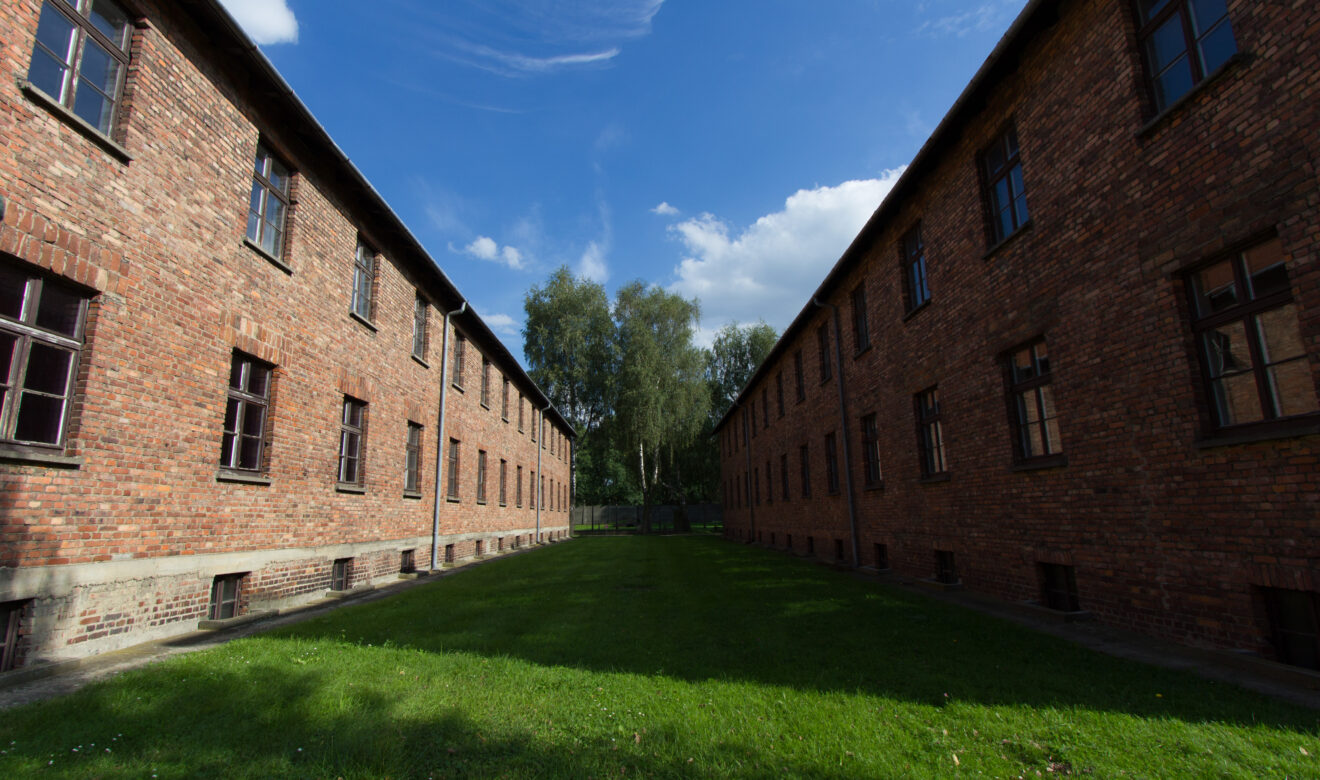
Communist security officers arrested him in May 1947. He was tortured, tried on charges connected to his underground activity and sentenced to death. He was executed in Warsaw’s Mokotów Prison on 25 May 1948. The featured image is a modern photograph of the barracks at Auschwitz I; it is not a wartime image of Pilecki or the camp.
Pilecki’s life is often told as a story of unusual courage, and his decision to enter Auschwitz was extraordinary. Yet its meaning rests in more than one individual’s bravery. The reports he and others carried out preserved evidence of Nazi crimes. The clandestine aid they organized mattered to prisoners facing daily danger. Their efforts could not stop the Holocaust, but they show how people sought to help, testify and resist inside a place built for terror and mass murder.
Sources and image credit
- Auschwitz-Birkenau State Museum: Resistance and organized resistance.
- Auschwitz-Birkenau State Museum: Reports by Auschwitz escapees.
- Auschwitz-Birkenau State Museum: Story of Witold Pilecki.
- Institute of National Remembrance: Report W, 1940–1943 and biographical account.
- Featured image: modern view of Auschwitz I barracks, photographed in 2014 by Ciprian Lazar, via Wikimedia Commons, CC BY-SA 4.0. The featured display is cropped from the original photograph.