On 15 January 1919, a storage tank broke open beside Commercial Street in Boston’s North End. Roughly 2.3 million gallons of molasses surged into a neighborhood of workers, homes, rail structures and waterfront yards. The substance is familiar as something thick and slow. Released from a towering, full tank, it became a fast, heavy wave. Twenty-one people died and about 150 were injured.
The Great Molasses Flood is sometimes told for its absurdity. The surviving photographs tell a different story: twisted steel, damaged buildings and a devastated stretch of city. Its deeper history concerns a tank that had warned of trouble, a company that dismissed those warnings and residents who paid for that neglect.
A tank beside the harbor
Purity Distilling Company built the tank in 1915 near Copps Hill Wharf. It stood about 50 feet tall and 90 feet across. Ships brought molasses to the wharf; the company pumped it into the tank and sent it onward by rail to distilleries. Molasses was an industrial raw material, not a giant store of table syrup awaiting bottling.
The site placed large-scale industry close to the everyday life of the North End. Commercial Street carried workers and carts past rail lines, a paving yard and buildings near the harbor. A failure at the tank would not stay inside the company’s property. That physical proximity is essential to understanding why its condition mattered so much.
The tank leaked before it failed. Boston’s Archives and Records Management division records that residents noticed molasses escaping from its seams. Children reportedly collected some of the drips. The company painted the tank brown, making leakage less conspicuous. These details can sound quaint in a retelling, but they describe visible warnings from a vessel holding millions of gallons.
The afternoon it burst
The weather was unusually mild for January when the tank ruptured around midday. Witnesses heard a low rumble. The released molasses moved across the surrounding streets with enough force to wreck buildings, shift a firehouse and damage the elevated railway. Estimates of the wave’s precise height vary among accounts; the consequences are beyond dispute.
The initial surge was swift. The City of Boston gives its speed as about 35 miles per hour. That figure is an estimate, not a measurement taken by an instrument in the street. The familiar expression “slow as molasses” describes a different situation: a small amount poured from a container. Here the weight and pressure of a huge volume drove the first rush.
Research presented to the American Physical Society adds another part of the explanation. Molasses is denser and much more viscous than water, and its resistance to flow rises as it cools. A rapid initial wave could therefore be followed by a sticky, difficult mass. People caught in debris faced a danger that did not end when the visible surge slowed.
Rescue in a ruined street
Police, Red Cross workers, sailors and others reached the scene. The wreckage made rescue difficult: molasses coated broken timbers, rail equipment and the ground beneath them. The dead were not an anonymous number. Many were laborers and drivers working around the wharf and paving yard. The City Archives also identifies two ten-year-olds, Pasquale Iantosca and Maria Distasio, among those killed.
The photographs made during and after the disaster show the scale of the work ahead. Crews had to search damaged structures, help the injured and clear streets that were both slippery and adhesive. According to the City Archives, workers found that salt water helped break down the molasses and sprayed the area with water drawn from the harbor. Cleanup was a laborious public task after a private tank failed.
It is easy to reduce the event to a single dramatic moment. For survivors, the flood also meant injury, the loss of relatives and disruption to work and homes. The aftermath continued in hospitals, on the waterfront and in court long after the brown residue had been washed away.
What the investigation found
The tank’s owners initially advanced the idea that a bomb planted by anarchists had caused the rupture. Investigators and plaintiffs examined a less sensational possibility: structural failure. Boston’s City Archives reports that engineers found the walls too thin for the load and that the metal was vulnerable to cracking. The American Institute of Chemical Engineers’ process-safety account likewise identifies inadequate inspection during construction among the causes.
The precise interaction of weak steel, pressure, weather and a recent shipment of molasses has been studied in different ways. It is safer to distinguish those contributing conditions from the central finding. The court-appointed auditor in the consolidated civil case concluded in 1925 that negligence by the tank’s owners caused the collapse. The sabotage claim did not displace evidence of an unsound structure.
That conclusion followed years of litigation by people whose families, bodies, livelihoods and property had been harmed. It shifted the question from whether the flood was a freak event to whether the risk should have been recognized and controlled. The answer was visible partly in the tank’s own leaking seams.
The flood’s lasting lesson
The disaster became a touchstone for the regulation of large structures and for professional responsibility in engineering. Accounts often compress that change into a claim that one flood created modern building law overnight. Reform was more gradual. Still, the case made a plain argument for competent design, meaningful inspection and accountability when industrial equipment stands beside a community.
The North End waterfront has changed greatly since 1919. Researchers at the University of Massachusetts Boston’s Fiske Center have used historic maps and geophysical survey work to locate traces of the tank site beneath today’s Langone Park area. Their work is a reminder that the disaster happened in a specific, inhabited place, even as the physical setting was rebuilt.
The Great Molasses Flood endures because its material seems improbable. Its causes are more recognizable: an industrial vessel under stress, reported defects, and the choice to keep using it. Remembering the 21 people killed asks us to look past the strangeness of the substance and toward the safety decisions that made the catastrophe possible.
Sources and image credit
- City of Boston Archives and Records Management: “100 years ago today: Molasses crashes through Boston’s North End”.
- American Institute of Chemical Engineers, Center for Chemical Process Safety: “The Great Boston Molasses Flood of 1919”.
- American Physical Society: “In a sea of sticky molasses: The physics of the Boston Molasses Flood”.
- University of Massachusetts Boston, Fiske Center: Langone Park geophysical survey.
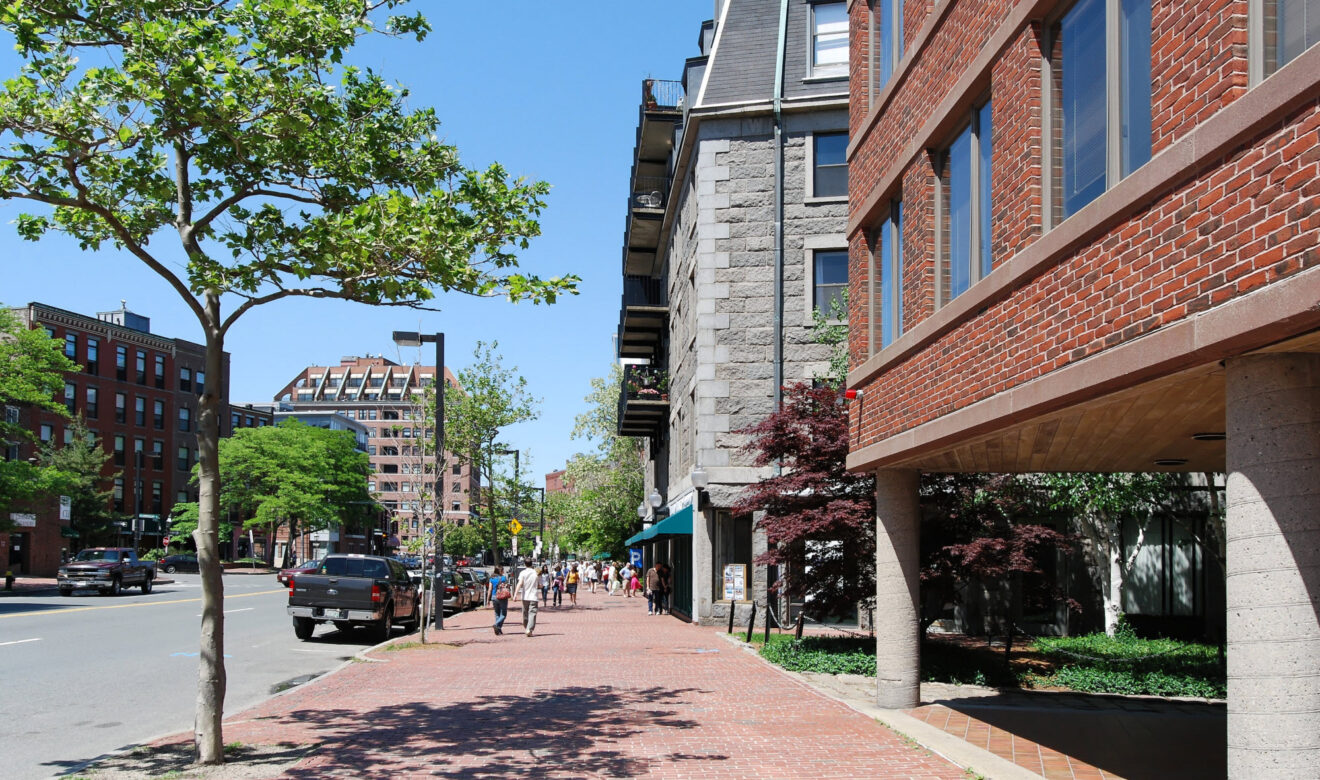
- Featured image: “Commercial Street, Boston”, photographed in 2009 by Marc N. Belanger (Marcbela), via Wikimedia Commons; CC0 1.0 Universal. This is a modern view of Boston’s North End, not a photograph of the 1919 flood.